

I have been residing in the shadows of the Cascades for right around 20 years now. At the beginning, I wasn’t running. I was finishing out my college career playing baseball, getting married, and starting a family — all of which ultimately led to my running life. But you know who has been doing the running thing for 20 years?
The Brooks Cascadia.

That’s right. While I was busy figuring out adulthood, the Cascadia was out there doing what it does best: getting people onto trails and getting them back home again.
And now, 20 years after the original, we have the Brooks Cascadia 20.
See all our posts on Brooks here!
Looks:
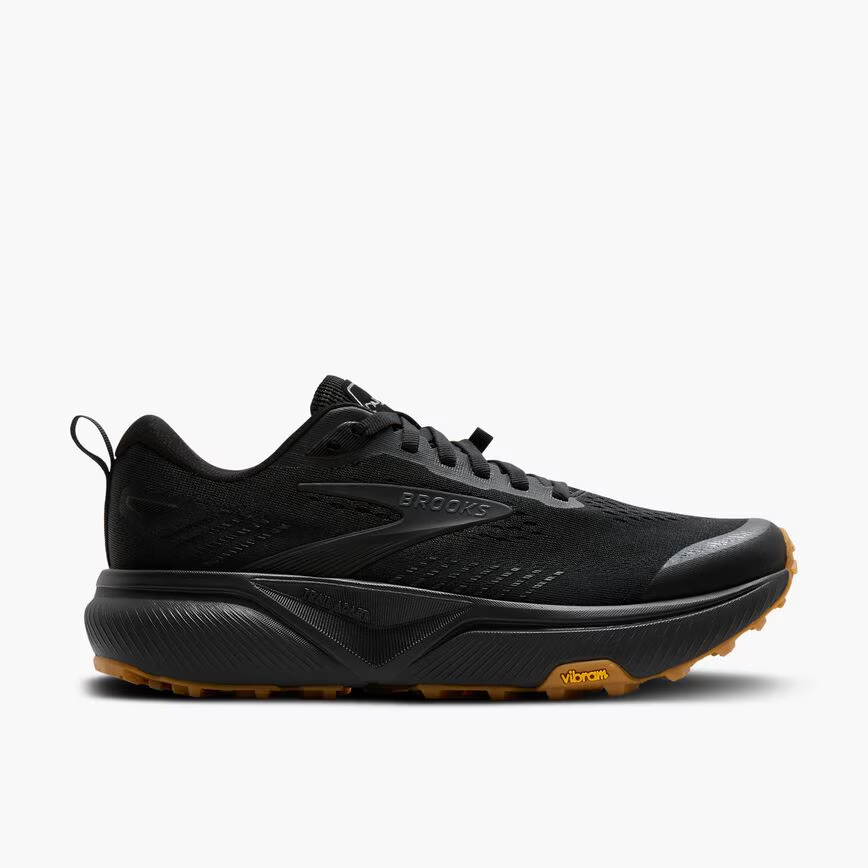
Let’s be honest: looks are probably one of the least important things about a trail shoe.
If you’re running trails in Oregon, regardless of the weather or season, there’s a pretty good chance these things are going to get beat up and dirty quickly. Kick up some dust in the high desert foothills or splash through a muddy Forest Park trail in December, and whatever these shoes looked like when they came out of the box probably isn’t going to last long.
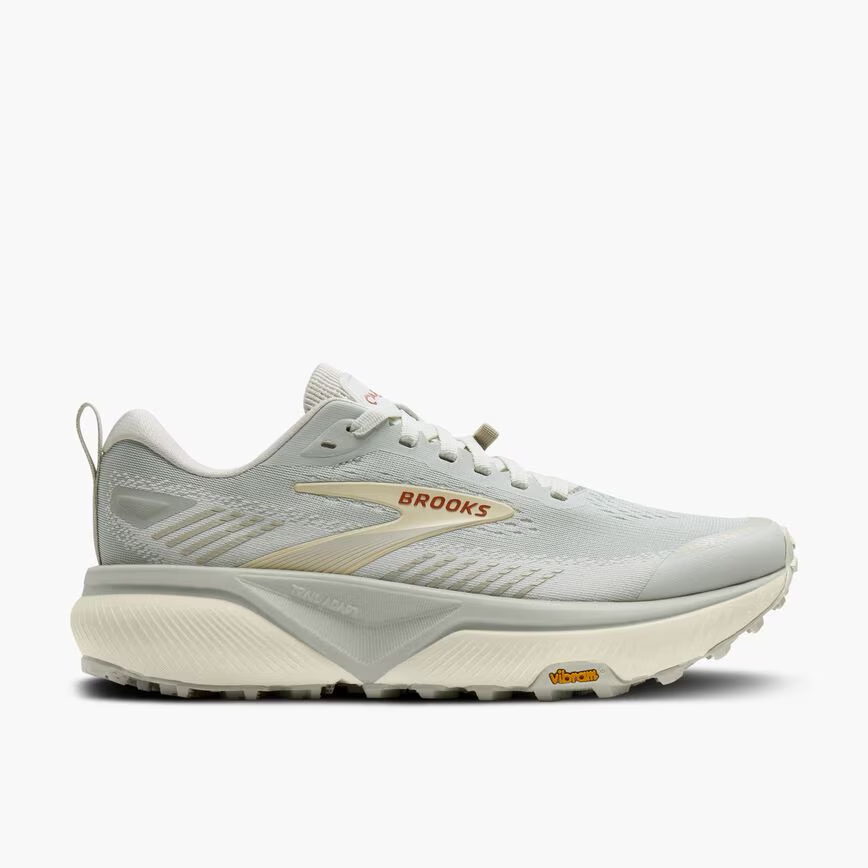
That said, I actually like the look of the Cascadia 20.
There is some unique hash-style shading across the upper that gives it a little more visual interest without making it overly flashy. Brooks has several colorways available, and none of them are screaming for attention, but they all have a little understated personality. Though I think our review pair is the most meh of the bunch.

What did catch me off guard was just how much the shoe looked like a road-running shoe to me.
That probably sounds strange considering we’re talking about the Cascadia, but if I were looking at the shoe from above without knowing what it was, I could easily see my brain going toward a road shoe first. A lot of that comes from the new upper, which we’ll get into in a minute.

The Cascadia has always been the workhorse of the Brooks trail lineup. It has never really tried to be the flashiest trail shoe on the mountain or the shoe that makes you wonder if you’ve suddenly become an elite ultrarunner. It has generally just been a dependable option for people who want to run trails.
The Cascadia 20 continues that tradition, although Brooks has made some meaningful changes this time around.
Specs:
- Stack Height: 38 mm heel / 32 mm forefoot
- Drop: 6 mm
- Weight: 10.8 oz (Men’s size 9)
Upper:

The Cascadia 20 gets one of its more noticeable updates up top. Brooks has moved to an airmesh upper, and it’s a pretty significant departure from some of the more traditionally trail-looking uppers we’ve seen on previous Cascadias.
The upside is that it feels comfortable and breathable. The shoe has a nice, secure feel around the foot without feeling like Brooks has wrapped your foot in a bunch of unnecessary trail-shoe armor.
There’s also plenty of padding around the heel and, while the tongue isn’t as plush, it sort of contributes to a comfortable, almost road-shoe-like feeling. And I have to admit, I like it. But there is one little question sitting in the back of my mind – how will this upper hold up for the people who are actually going to put the Cascadia 20 through the wringer?

If you’re like me and you’re getting out for a few trail runs a month, I don’t think you’re going to have much to worry about. But if you’re the person putting 40 or 50 miles a week into these things, scrambling over rocks, kicking through brush and generally doing everything possible to destroy your footwear, I wonder if this particular upper will have the same longevity as some of the more rugged materials we’ve seen on previous Cascadias.
That’s not a knock based on experience. It’s just something I’ll be watching.
Midsole:
The Cascadia has never been an especially bare-bones trail shoe when it comes to cushioning, but Brooks has added even more underfoot here while changing the foam to DNA Flash v2. The result is a shoe that feels cushioned without turning into a giant marshmallow strapped to your foot. There’s some softness there, but the Cascadia 20 still feels planted and stable underneath you. There is definitely a noticeable improvement in the feel between last year’s DNA Loft construction and this one.

That’s important because one of the things I have always appreciated about the Cascadia is that it doesn’t try to make trail running more complicated than it needs to be. Even with the additional cushioning, the shoe doesn’t have that tall, wobbly sensation that can sometimes come with adding more foam to a trail shoe.
It also feels lighter on foot than I expected considering the amount of shoe you’re getting.
Outsole:
We don’t talk about outsole rubber nearly as much when reviewing road shoes. On trail shoes, though its kind of important. And the big story here is the move away from their in-house rubber and the addition of Vibram Megagrip.

For the first time, the Cascadia gets Vibram Megagrip on the outsole, and after spending time in the Cascadia 19 last year, I noticed the difference.
Now, I’m not going to pretend I’m some kind of human traction sensor who can tell you that one rubber compound provides exactly 14.7 percent more grip than another. I took the Cascadia 19 on a pretty wide variety of runs last year, including some more technical terrain in Central Oregon. I never thought the grip was terrible. It wasn’t.
But the Cascadia 20 feels more dialed in. The Megagrip gives the shoe a little more confidence when the trail gets slick or unpredictable, and that’s exactly what I want from this shoe.
It’s not trying to be a specialty shoe for one particular type of trail. It’s trying to be the shoe you can throw on when you aren’t entirely sure what the trail is going to throw at you.
Overall:
Even with all the updates, the Cascadia 20 probably still pulls in one of the better iterations this line has had.

There are trail shoes out there that are more exciting. There are lighter shoes. There are shoes that are better suited for highly technical terrain. There are shoes designed specifically for racing long distances. But that’s never really been the Cascadia’s job.
The Cascadia is the trail shoe equivalent of the person you call when you need help moving. They’re going to show up. They’re probably going to have a truck. They’re going to complain about your couch being heavier than you said it was. And they’re going to get the job done.
After 20 years, that’s still the Cascadia’s biggest strength.


