

The North Face is back with a fresh round of summer releases, and leading the charge is the all-new Offtrail Ultra. Developed in close partnership with The North Face athlete team, this mountain-focused trail shoe is built for runners who thrive on steep, rocky, and technical terrain.
It’s designed to tackle everything from rugged adventure runs to FKTs with confidence. While we may not spend our weekends chasing alpine ridgelines or hundred-mile finishes, we know a good trail shoe when we see one. Let’s dive in.
Looks
This is a fun, cutting-edge looking shoe. From the moment you pull it out of the box, it looks ready for adventure and built to attack the trails with purpose.

As modern as the Offtrail Ultra looks, it’s actually rooted in The North Face’s history. The shoe draws inspiration from the iconic 1990 Trans-Antarctica Expedition (TAE). During the historic seven-month, 3,741-mile crossing, The North Face outfitted a global team of six explorers who helped raise awareness for protecting our planet.
The Offtrail Ultra’s color palette pays tribute to the original TAE gear while also serving a practical purpose, helping today’s runners stay visible as they move quickly across rugged terrain.
Construction
This is a shoe designed with mountain running, scrambling, steep descents, loose rock, and rugged alpine routes in mind.

The big story is its all-new dual-density midsole. As is often the case these days, the midsole is where brands are putting the bulk of their innovation, and The North Face is no exception. Here, the goal is to strike a balance between cushioning, responsiveness, and protection for runners tackling demanding mountain terrain.
Compared to many recent trail shoe releases, the Offtrail Ultra has a noticeably lower stack height (see specs below). That’s way less than another staple in the TNF lineup, and might seem surprising in an era of more max-cushioned trail shoes. But it makes sense for its intended purpose.

A lower-profile platform provides better ground feel, stability, and agility—qualities that become increasingly important when you’re picking your way through rocky, uneven terrain. It feels like the right choice for the type of runner this shoe was built to serve.
Specs
- Weight: ~9oz (Mens 9); ~8oz (Womens 9);
- Stack Height: 29mm heel / 23mm forefoot
- Drop: 6mm
- Lugs: 5mm
Upper

The upper is lightweight, well-built, and clearly designed with durability in mind. A reinforced mesh construction provides a nice balance of breathability and protection, standing up well to the abuse that comes with rocky, technical terrain. Despite the integrated gaiter and supportive overlays along the sides, the upper remains relatively simple in its overall design. There’s not a lot of unnecessary flair here—it does exactly what it’s supposed to do, and it does it well.

One of the defining features is The North Face’s SCREEGUARD integrated gaiter. Made from a stretchy knit material, it hugs the ankle comfortably while helping keep rocks, dirt, sand, and other trail debris from finding their way into the shoe. On a shoe built for scrambling through loose scree and rugged alpine terrain, this isn’t just a fun addition to stand out—it’s an essential feature.
The gaiter itself fits well and never felt restrictive, though having that extra coverage around my ankle definitely took a few runs to get used to. I also don’t think it holds its structure super fantastic and, thus, the security (or lack thereof) took some getting used to. The fact that the tongue is integrated into it made that secure feeling even more challenging to get. I wanted to lock them down, but overtightening the was initially a bit challenging.
Midsole

Again, the headline feature here is The North Face’s new DREAMBOUND dual-density nitrogen-infused superfoam midsole. For a shoe with such a technical focus, TNF designed the system to provide a balance of comfort, rebound, responsiveness, and protection on rugged terrain. The dual-density construction is a big part of that equation.
Rather than bonding two separate foams together with adhesives, the DREAMBOUND midsole is molded as a single piece. That creates a lighter, more seamless platform where the two densities work together instead of against each other.

While I am by no means a mountain junkie (even if I pretend to be in my dreams), I made a point to seek out more technical terrain while testing the Offtrail Ultra. Even with the higher ankle cuff and what looks like a fairly standard profile, the shoe feels light on foot. The ride is stable and protective without sacrificing the responsiveness needed to react quickly over rocks, roots, and uneven terrain.
Outsole
The outsole is no joke. The Offtrail Ultra features a full-length SURFACE CTRL G2 rubber outsole that’s purpose-built for the kind of terrain this shoe was designed to conquer. The headline specs are the aggressive 5mm lugs, which provide plenty of bite on loose dirt, mud, and rocky trails. But TNF didn’t stop there.

One of the more unique features is the addition of different dedicated toe lugs. They’re designed for those moments when a run turns into a scramble and you’re using your feet to grip rock faces as much as you are the trail beneath you. There’s a big difference between running upright and climbing over boulders on all fours, and those extra lugs provide additional traction and confidence when the terrain says so.

I don’t find myself in those situations very often (okay…hardly ever), but I know plenty of trail runners who do—or who aspire to. For that audience, this outsole design is right in the wheelhouse. Even if your adventures are a bit tamer and consist of technical trail runs mixed with hikes (or maybe just one or the other on any given weekend), the Offtrail Ultra feels more than capable of handling both.
Conclusion
All things considered, this shoe probably wasn’t made for the likes of me. I’m not out tackling Forest Park every day regardless of the weather. I’m not signing up for the Cascades Crest 100 or the Big Alta in Marin. I’m not chasing a UTMB qualifier or chasing ambitious mountain objectives. But that’s what surprised me most about the Offtrail Ultra.
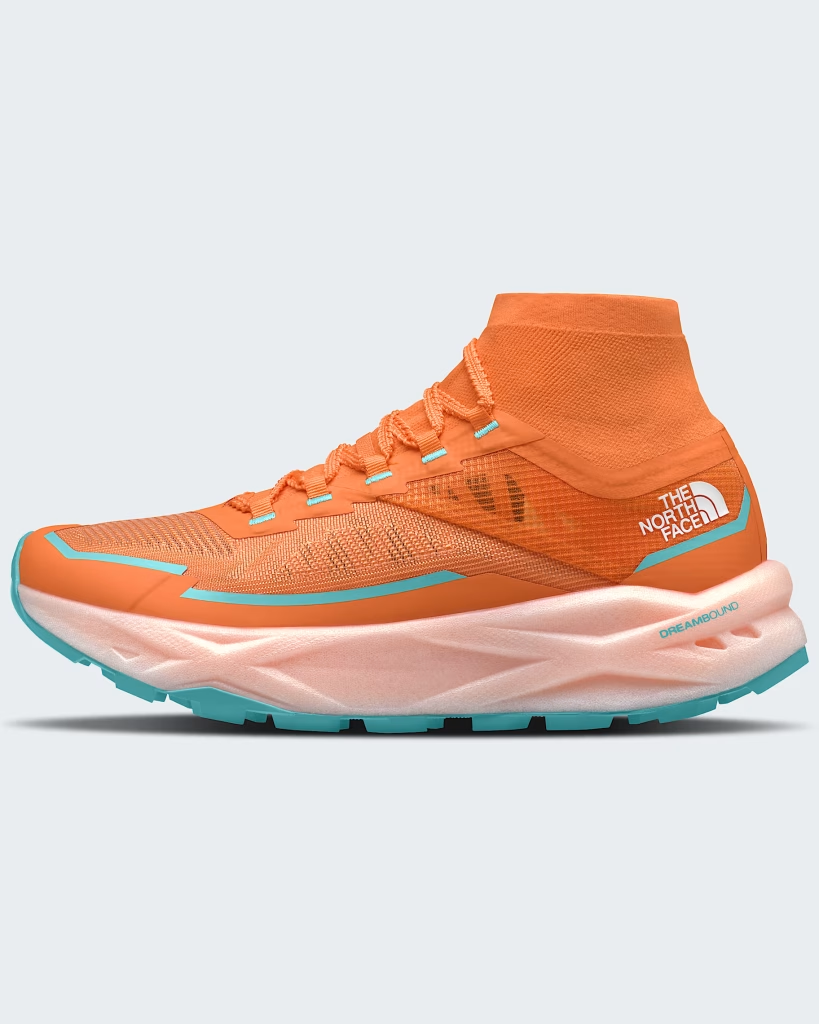
While it was designed with the type of runner taking on races like the Hardrock 100 or plotting their next FKT (quite literally – their athletes did these things), it still feels surprisingly approachable. I never felt completely out of place wearing these shoes. I suppose that’s logical in some ways as, when you’re spending countless hours on your feet in technical terrain, you need a shoe that balances precision with comfort.
For those elite mountain athletes, it has the protection, grip, and responsiveness to tackle some of the toughest terrain imaginable. For the rest of us, it offers a glimpse into that world without feeling overly intimidating. And the price is still reasonable – as least as far as many shoes go. I still think it has a place for the average trail runner like me—someone who may want to eventually venture onto more technical trails, take on a bigger adventure, or simply enjoy a lighter, quicker ride in a shoe that doesn’t rely on a plate.
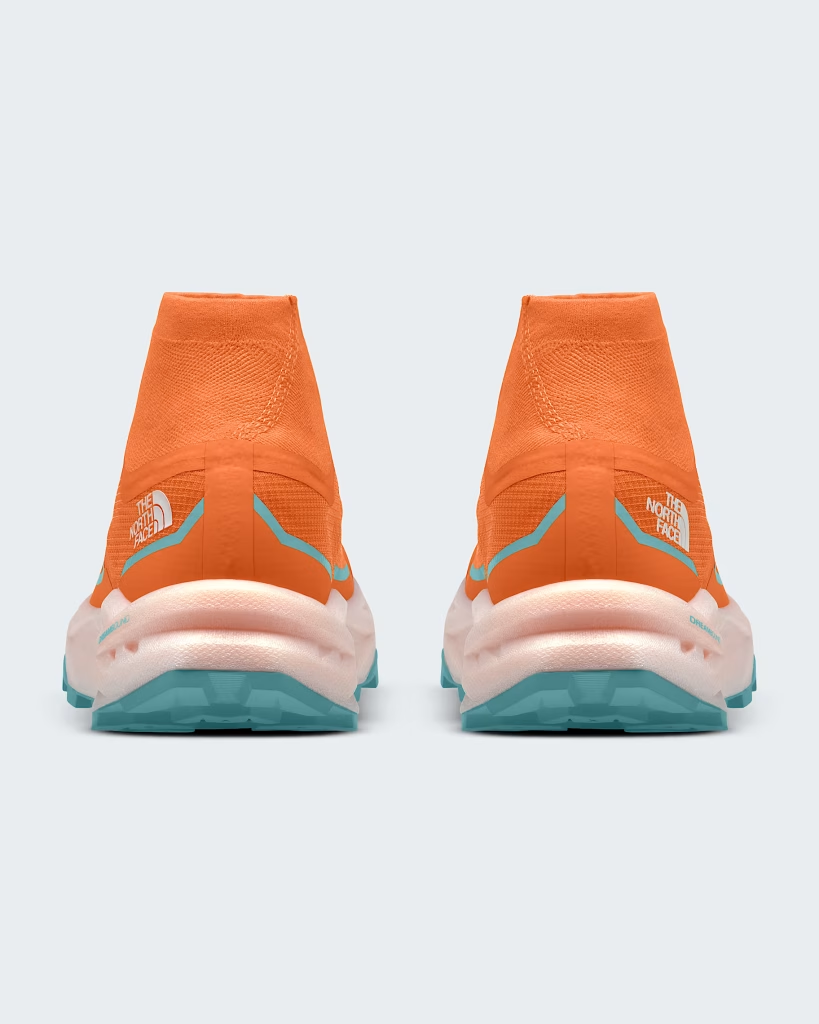
It may not turn me into a mountain goat overnight, but it certainly makes me want to find a few more rocky trails to explore.


