

By the time I started wearing the Lone Peak model from Altra, it had been on the market for 7 years. My first pair was the 4.5 in green. I loved the color, I loved how the MaxTrac outsole really grabbed the rocks, and I really loved how my feet felt in an Altra shoe. I hammered those shoes on the lava rock of Central Oregon until they fell apart with over 700 miles on them. The Lone Peak was the shoe I was wearing when I ran 100 miles in a week for the first time, and I have come back to this model more than once in the last 7 years.

Altra’s latest iteration is the Lone Peak 9, with an entire family of options to choose from. Starting with the base LP9, which weighs 11.15oz (men’s sz 9) and utilizes Altra’s MaxTrac outsole. The 9 is also available in a waterproof option, both low (13.85oz/men’s sz 9) and mid (15.95oz/men’s sz 9), and a GoreTex option (12.15oz/men’s sz 9).

From there, Altra adds a plus symbol to the 9 and offers similar choices, whether the base 9+ (11.55oz/men’s sz 9), the 9+ GTX (12.4oz/men’s sz 9), or the 9+ and wander (11.55oz/men’s sz 9). The big difference with the plus is the outsole, where the 9 uses the MaxTrac and the 9+ uses Vibram Megagrip. Having worn both, the traction is about the same, in so much both do a good job in the dry conditions, and handle rocks really well. In muddy conditions, the outsole doesn’t matter a lot, but the waterproof and GTX models are nice to have.

For this review, I will spend the rest of the article focused on the 9+ GTX, which oddly looks like my first pair! From the go let me mention how much I love the earth tones of Dusty Olive colorway. If there is a color that seems to compliment mud, this is it. Believe it or don’t, but the stack height is the same between the 4.5 model and the 9, which is 25mm. And while Altra has begun playing with some shoes that are not zero drop, that cannot be said about the Lone Peak, which continues to be a zero-drop shoe.
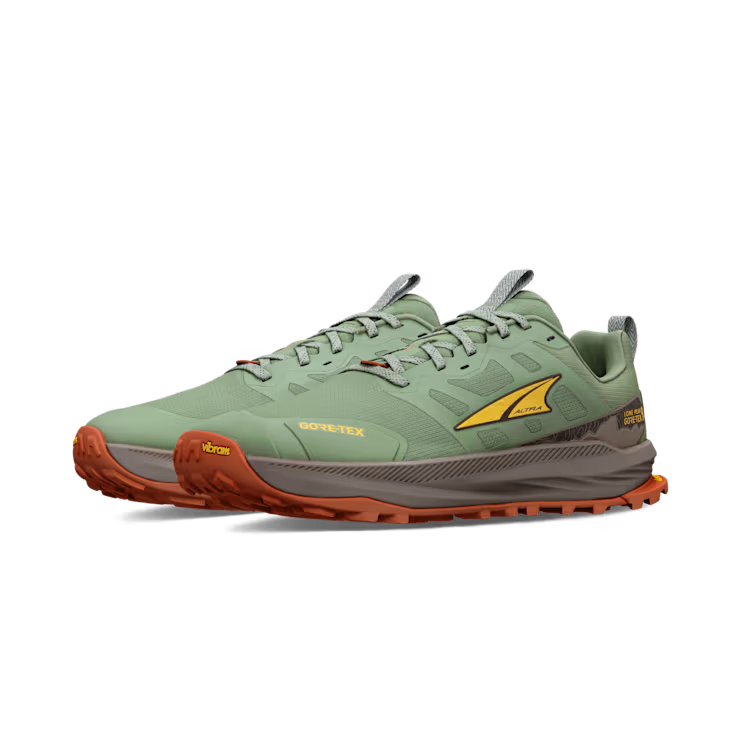
Having worn my fair share of Lone Peak models, I know going in that these are not the lightest compared with a lot of other options out there. This has always been the case for the Lone Peak. And while weight is certainly a factor as you push your miles further and further, comfort is one place where the Lone Peak has consistently shone. The Lone Peak 9 is no different here, and it was comforting to slip them on when I first got them, to feel that well-known Altra EGO foam under my feet.

On the trail the Lone Peak 9+ GTX was, as I read in an article about a pizza joint recently, unremarkably great. Comfortable, reliable, kept my feet dry in rainy/muddy conditions, steady…I could honestly be describing my grandparents Cadillac. But for those of us looking for a trail shoe that does what it’s supposed to do, the Lone Peak consistently does what it says it will, which is perform.

As for determining which Lone Peak to get, my advice is to try them on. The Vibram outsole wears a little stiffer (at first) on my feet, and I think that can be attributed to the fact that the Vibram compound is a more dense base than the MaxTrac outsole. It is also said that the Vibram outsole should outlast its MaxTrac counterparts in terms of mileage and wear and tear. However, the MaxTrac outsole feels more grippy to me in the warmer months. Add that to it being a little lighter and it’s worth noting that the MaxTrac is no slouch of an option.
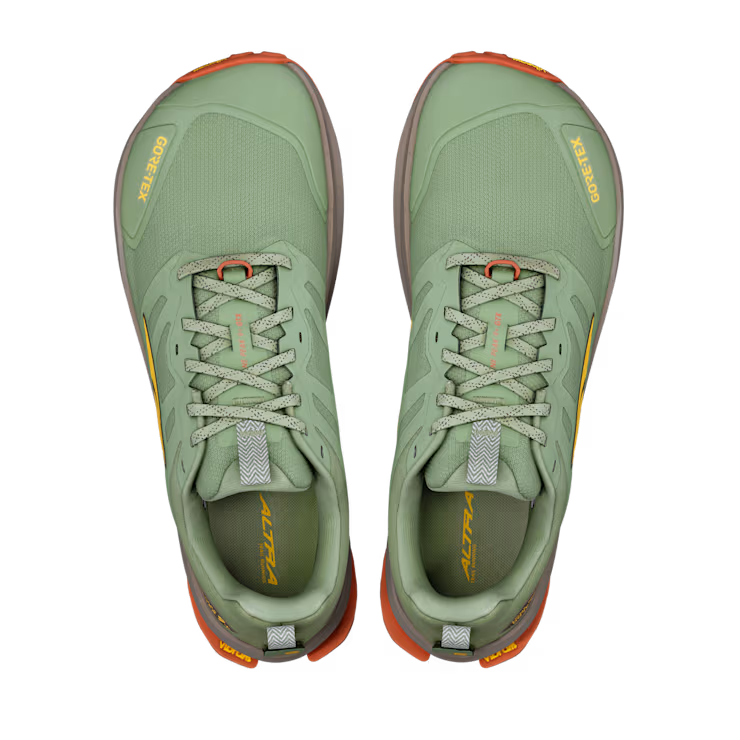
There is also the addition of GoreTex in the GTX models. GoreTex is a lightweight, breathable liner used in the uppers of the shoe and a huge aid in waterproofing. Here in the PNW where we see a bit of rain, and can expect wet trails in the fall, winter, and spring, having some level of waterproof material as part of your gear is essential.
Ultimately, the Altra Lone Peak continues to be one of the best selling trail shoes on the market, and for good reason.


